Leverage is the feature that makes forex trading accessible with small deposits — and it is also the main reason most retail traders lose money. Here is how it works.
What is leverage?
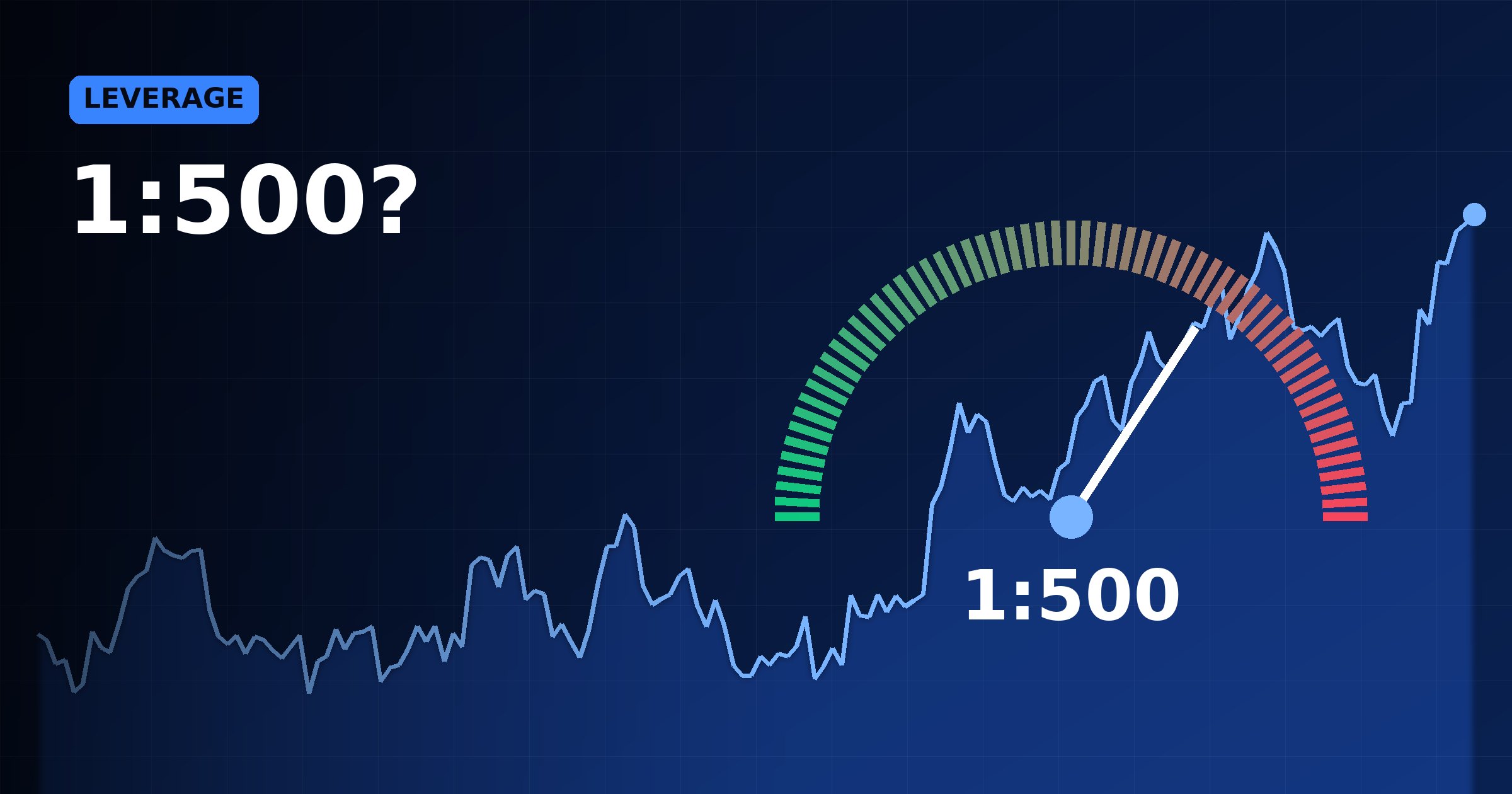
Leverage lets you control a large position with a small amount of your own money. With leverage of 1:100, every $1 in your account controls $100 in the market. With 1:500, $1 controls $500.
What is margin?
Margin is the money the broker sets aside from your balance to keep a position open. The formula is simple:
- Margin = Position size ÷ Leverage
For example, buying 1 standard lot of EURUSD (100,000 euros, about $108,000) with 1:100 leverage needs about $1,080 of margin. With 1:500 leverage it needs about $216.
Leverage does not change your profit per pip
This is the most misunderstood point. On EURUSD one standard lot is worth about $10 per pip whatever leverage you use. Leverage only changes how much margin is locked, and therefore how big a position you are allowed to open. Danger comes from opening positions that are too large for your balance.
Margin call and stop-out
- Margin level = Equity ÷ Used margin × 100%.
- When the margin level falls to the broker's margin call level (for example 60% on Exness Standard), you are warned.
- At the stop-out level the broker starts closing your positions automatically to stop your balance going negative.
Leverage limits around the world
Regulators cap leverage for retail clients: 1:30 on major pairs in the UK, EU and Australia, and 1:25 in Japan. Offshore entities often allow 1:500, 1:1000 or more. Higher limits are not a reason to use them.
How much leverage should you use?
A safer approach is to ignore the maximum and size every trade by risk:
- Decide to risk 1% of your balance (for example $5 on a $500 account).
- Set your stop loss at a logical level, for example 25 pips away.
- Position size = $5 ÷ (25 pips × pip value). On EURUSD that is 0.02 lots.
If you size positions this way, the leverage setting becomes a safety buffer instead of a trap.
Gold (XAUUSD) moves faster
Gold often moves $20–$40 in a day. One standard lot of XAUUSD (100 ounces) changes by $100 for every $1 move in price, so position sizes for gold should be much smaller than for EURUSD.